Care Guide
Dwarf Crayfish Care Guide
Practical care for Cambarellus dwarf crayfish, including Blue Brazos dwarf crayfish, Cajun crayfish, CPO Mexican dwarf crayfish, and Cambarellus diminutus. Stable water, hides, food, and tank mate choices matter more than chasing perfect numbers.
Dwarf crayfish care water parameters
72 to 82 F
Room temperature to slightly warm. No heater usually needed unless your room drops below 70 F.
6.6 to 7.4
Neutral to slightly acidic. Most tap water works. Stability matters more than hitting an exact number.
50 to 300 ppm
Moderate to hard. Calcium is important for exoskeleton development and successful molts.
40 to 120 ppm
Provides pH buffering. Adequate KH prevents dangerous pH swings.
0 ppm
Must be zero. A fully cycled aquarium is essential before adding crayfish.
< 20 ppm
Keep low through regular water changes.
Tank requirements for Blue Brazos and other Cambarellus
Tank Size
Minimum 5 gallons for a pair. 10 gallons for a colony. Larger tanks provide more stable water and more territory.
Substrate
Fine gravel or sand. Dark substrates bring out the best coloration. Avoid large gravel that traps waste.
Filtration
Sponge filter is ideal. If using a hang on back filter, cover the intake with a prefilter sponge to protect babies.
Plants and Decor
Java moss, Java fern, Anubias, and floating plants. Add driftwood, rocks, and small caves or PVC pipe for hiding.
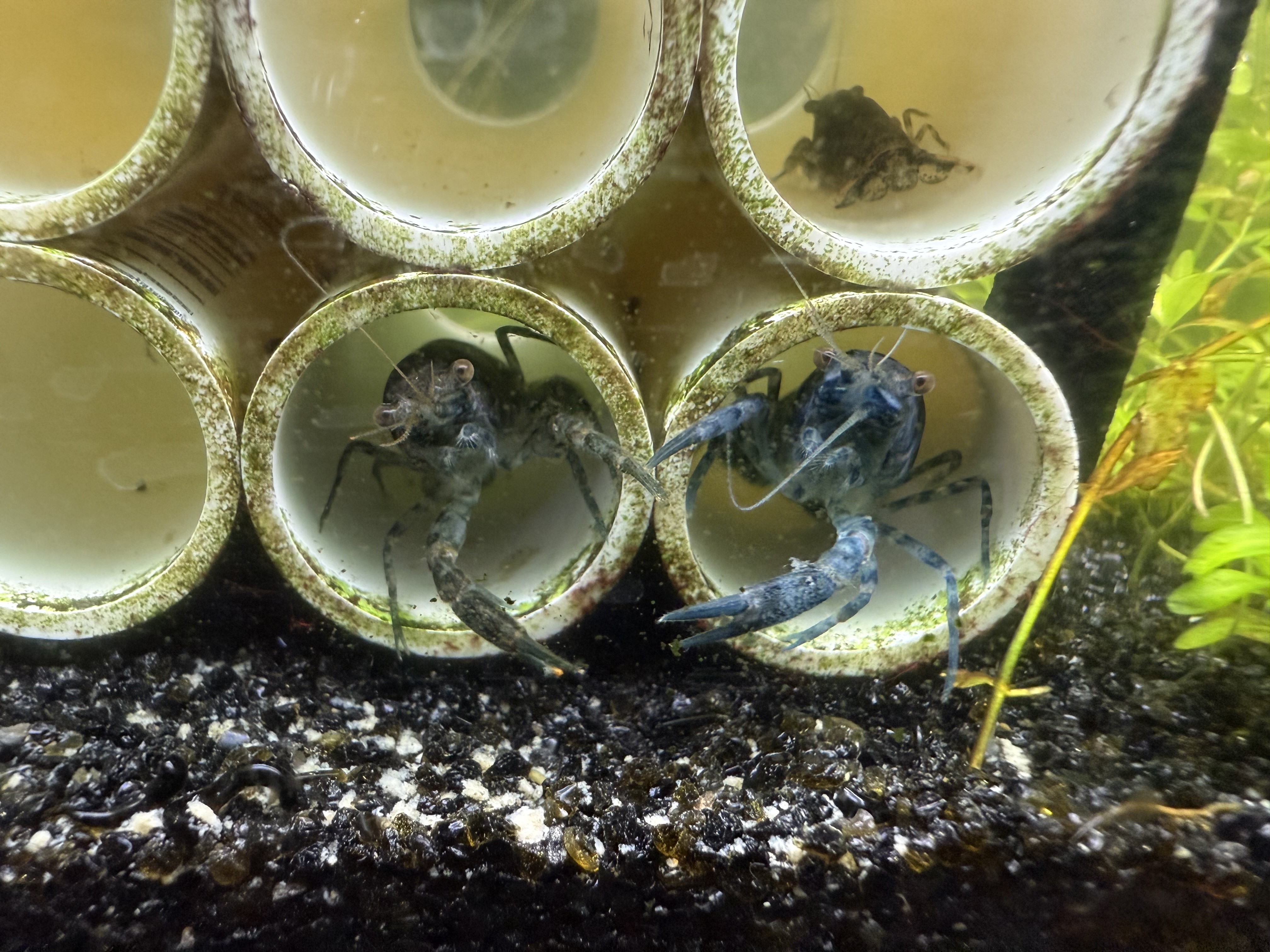
PVC pipe sections make excellent hides
What They Need
After molting their shells are soft and they need somewhere to go. Caves, tunnels, and plants will make them feel comfortable.
Dwarf crayfish stay at the bottom 99% of the time. Floor space matters more than tank height.
Like Neocaridina shrimp, they eat dying and dead animals and plant matter. They clean up after themselves.
They enjoy staying in the shade. Floating plants and overhangs help.
Dwarf crays explore the bottom. Having circulation moving things around keeps everybody happy.
Food and diet
Dwarf crayfish are true omnivores. In the wild, they feed on biofilm, algae, detritus, and small invertebrates. In the aquarium, they accept a wide variety of foods.
Recommended foods
- Sinking pellets or wafers (shrimp/crayfish specific)
- Blanched vegetables (zucchini, spinach, cucumber)
- Algae wafers
- Frozen or freeze dried bloodworms (occasional)
- Indian almond leaves
- Calcium rich foods (cuttlebone)
Feeding tips
Frequency
Small amounts every 1 to 2 days. Remove uneaten food after a few hours.
Variety
Rotate food types for better coloration and health.
Calcium
Critical for exoskeleton. Supplement with cuttlebone or crushed coral.
Molting
They eat their shed exoskeleton. Do not remove it.
Tank Mates
Compatible
Endlers, ember tetras, chili rasboras
Healthy adult Neocaridina or Amano, with dense cover
Nerite, mystery, ramshorn
Same species, with adequate hides and enough bottom space
Avoid
Cichlids, large barbs, bettas
Procambarus, Cherax
Loaches, large catfish
The Breeding Cycle
- After a female dwarf crayfish molts, she may release pheromones that trigger active searching behavior in males.
- When receptive, the pair mates belly to belly for several minutes.
- The female then hides, lays her eggs, and attaches them to her swimmerettes.
- Egg counts vary, but small clutches of roughly 20 to 60 are common for many dwarf crayfish.
- For 3 to 4 weeks, she fans the eggs and removes any that fail to develop.
- During this period she hides more than usual and should have quiet cover and regular access to food.
- The young hatch as miniature crayfish and may stay near the female briefly.
- Once independent, the young need moss, leaf litter, and small hides to avoid being eaten by adults.
- After the brood is released, the female resumes normal feeding and activity.
- With stable water, cover, and food, the cycle can repeat as the colony matures.
Provide dense moss, leaf litter, and small caves to reduce predation from adults. The babies are fully independent from birth.
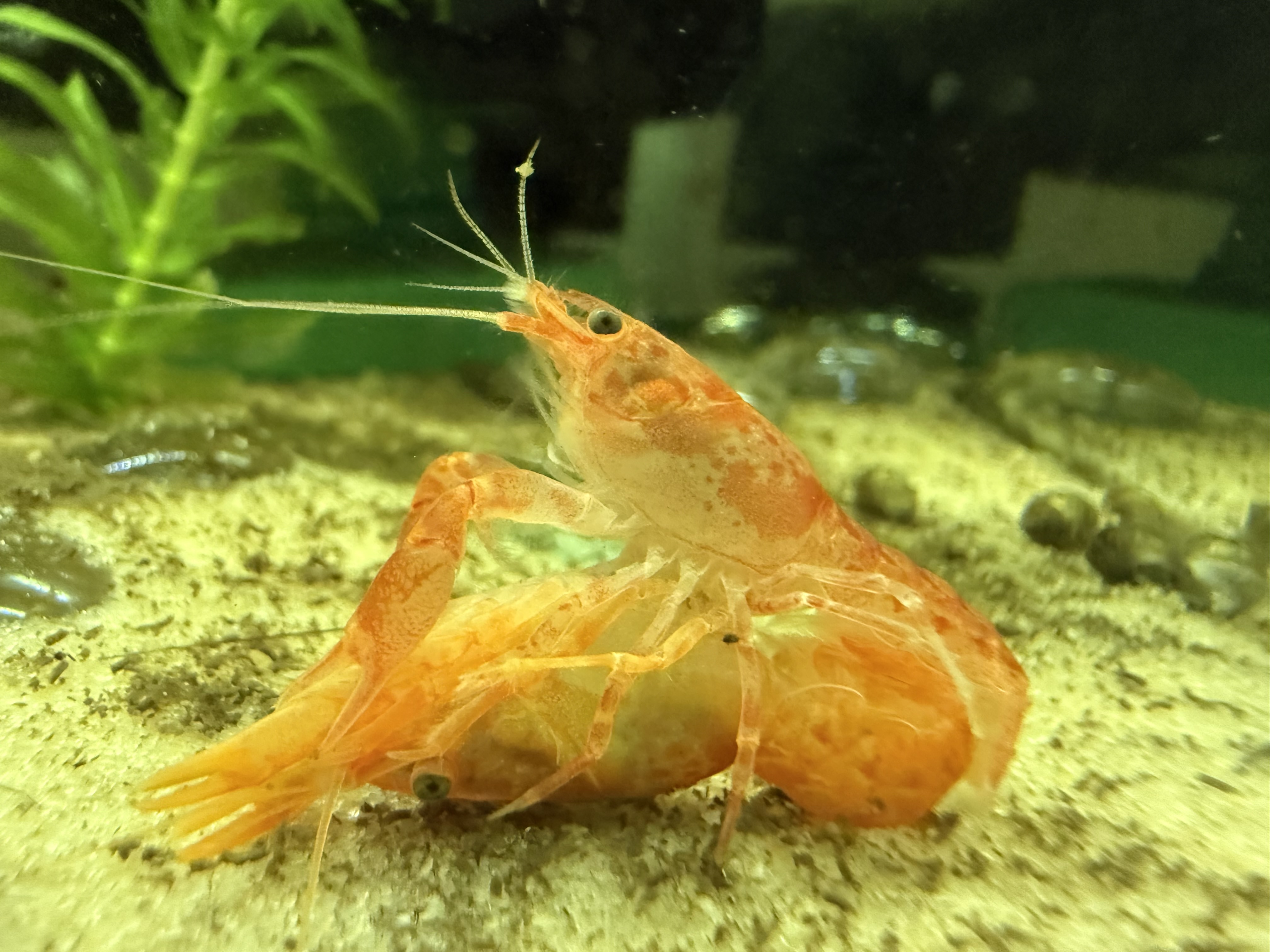
CPO pair mating
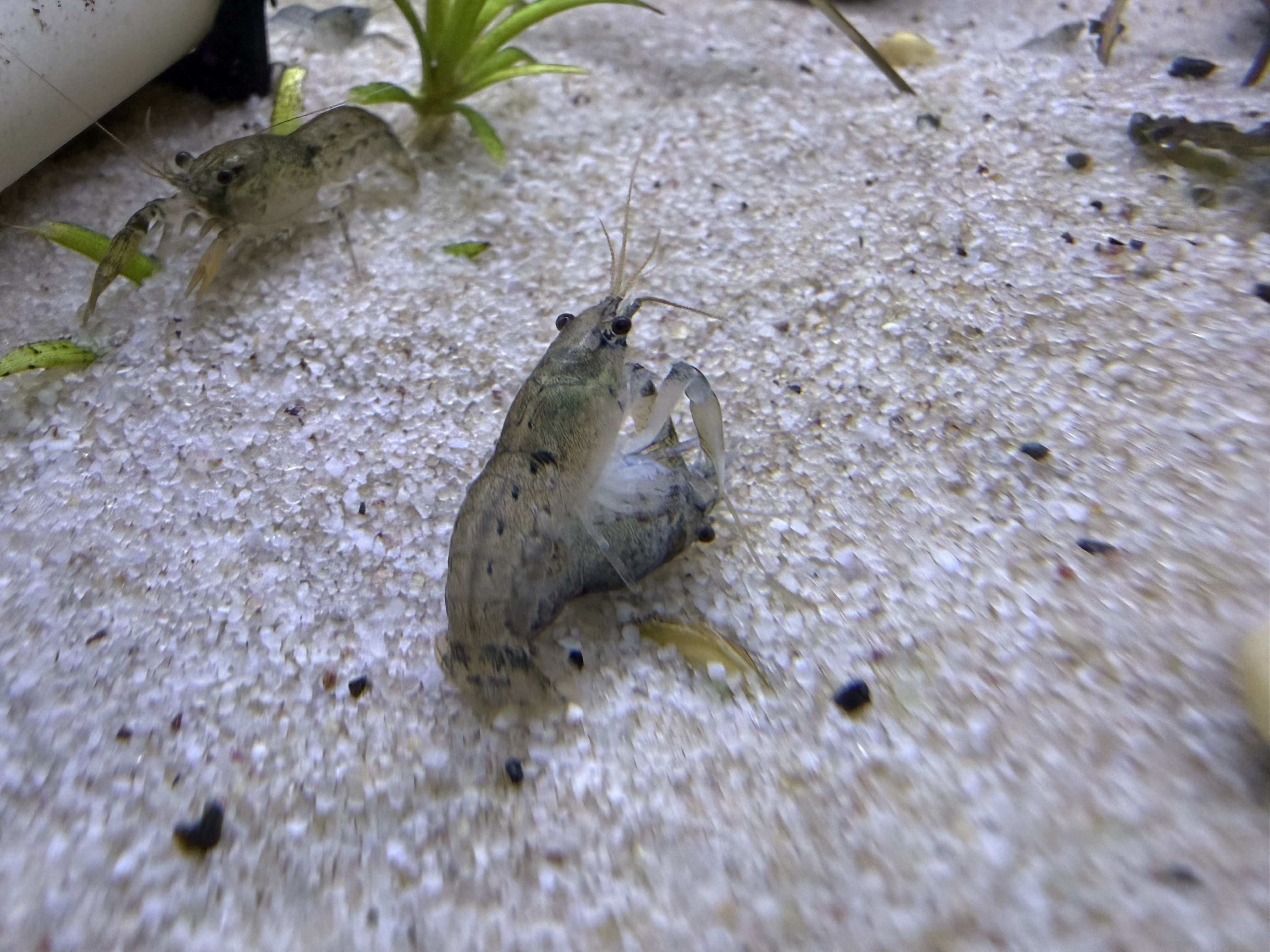
Brazos pair mating
Molting
Crayfish shed their exoskeleton to grow. This is the most vulnerable period in their life.
Pre molt
Reduced appetite, less activity, slightly cloudy appearance.
During
Splits the old shell and emerges soft. Usually at night. Do not disturb.
Post molt
Hides 1 to 3 days while hardening. Will eat the old shell for calcium. Never remove it.
Prevention
Adequate calcium, stable water, and proper GH prevent failed molts.
Shipping acclimation
After live shipping, keep the room calm and the aquarium lights low. Float the bag for 15 to 20 minutes to match temperature, then slowly add tank water over 30 to 60 minutes before moving the crayfish into a cycled aquarium with hides.
Feed lightly for the first day and give new arrivals time to explore. If you are ordering Blue Brazos dwarf crayfish, review the shipping page first so you understand weather holds, state restrictions, and live arrival terms.
Live shipping informationDwarf crayfish care FAQ
Care guide
After live shipping, give domestically bred dwarf crayfish time to settle into clean water with cover before heavy feeding.
How to keep Blue Brazos, Cajun crayfish, CPO, and Cambarellus diminutus healthy
Dwarf crayfish care is straightforward when the tank is stable. Blue Brazos dwarf crayfish, Cajun crayfish, CPO crayfish, and Cambarellus diminutus all need clean, cycled water, a mature bottom layer with biofilm, and enough hides to stay protected after molting.
Most problems come from unstable water, aggressive tank mates, or bare tanks with nowhere to hide. A planted 10 gallon aquarium with sponge filtration, leaf litter or wood, and several caves is a strong starting point for a small colony.
If you are still choosing a species, start with Blue Brazos dwarf crayfish for the Brazos color forms, Cajun crayfish for a hardy natural dwarf crayfish, Cambarellus diminutus for a very small species, or the shop page for current availability.